WorkGrid Intelligence
EPOCH platform
Predict the failure. Call the peak. Price the storm.
Grid Intelligence is the platform we built on Snowflake to answer the three questions that decide a cooperative’s year. Every model result was measured on a test fleet built from public utility data.
- Built by
- EPOCH platform for electric cooperatives
- Industry
- Electric utilities
- Timeline
- Ready to pilot
- Built with
- Snowflake, Snowflake ML FORECAST, Snowflake ML ANOMALY_DETECTION
The problem
A cooperative’s year comes down to three questions. Which transformer fails next? When does the peak land? What does a storm cost the members who live through it?
Each one has a price. A distribution transformer now takes about two years to procure, at prices up as much as 95% since 2019. For some cooperatives, a year of transmission charges is set by demand in four fifteen-minute intervals, the highest of each summer month.
Most cooperatives already collect the data to answer all three, in meters, line sensors and outage logs. It sits in systems never built to talk to each other.
What we built
Grid Intelligence brings meter, line sensor and outage data together on Snowflake and turns it into decisions a team can act on.
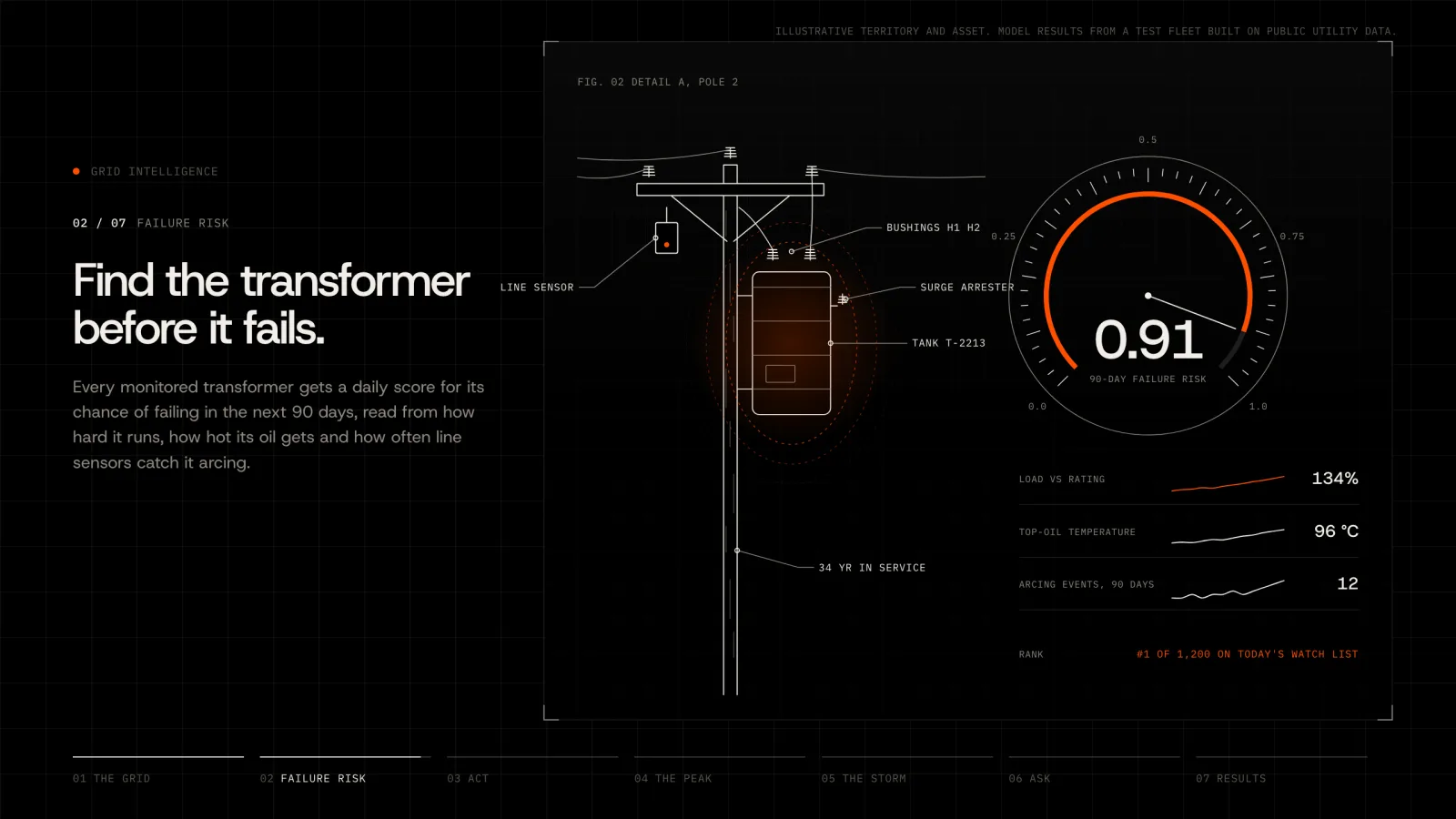
- Every monitored transformer gets a daily score for failing within 90 days, read from loading, oil temperature, arcing and heat stress.
- Each unit on the watch list carries a plain reason. Dispatching an inspection writes the work order back to Snowflake.
- At noon the platform forecasts tonight’s peak and calls demand response only if tonight looks like one of the month’s top three.
- A storm replay compares restoration as it happened against crews staged early on the 20 riskiest feeders. A dispatch board recommends the nearest qualified crew.
- An outage cost view uses Berkeley Lab estimates in 2013 dollars. Eight hours without power costs a household about $17 and a large business about $84,000.
- Anyone can ask in plain English. Snowflake Cortex writes one query, runs it read-only inside the account and answers in two sentences.
How we know it works
No cooperative’s internal data went into Grid Intelligence. We generated a test fleet of 1,200 transformers to match public utility records. Every screen labels it synthetic.
We graded the failure model the way it would be used, training on one stretch of time and testing on the months after. On the test fleet it scored an AUC of 0.81. Across 31 failures in the test window, the 50-unit watch list caught 58% and the riskiest tenth of units held 6.5 times their share.
The load forecast had to beat two simple baselines to stay. Over seven held-out months on the test fleet it missed by 8.8%, against 11.8% for repeating yesterday’s load and 16.3% for last week’s. In the late-afternoon hours that set the bill it held 8.5% against 10.8%. Replayed out of sample across one test-fleet summer, the noon rule called 21 events and caught all four monthly peaks.
- Every panel prints the Snowflake query ID behind it, so anyone can check exactly what ran.
- Run natively in Snowflake ML FORECAST, the same forecast missed by 6.0% against 10.0% for persistence on a two-week test-fleet holdout.
Results
- of failures caught by a 50-unit watch list on the test fleet
- 58%
- load forecast error on the test fleet, against 11.8% for yesterday’s load
- 8.8%
- summer peaks caught in an out-of-sample replay on the test fleet
- 4 of 4
- a year in avoided transmission cost per megawatt off the four peaks
- $68,550
What changed
Grid Intelligence is a working control room on Snowflake, with every panel traced to its query. It is ready to pilot.
A pilot starts with a data inventory. It swaps the synthetic fleet for a cooperative’s own data and holds every model to the same baselines.
Where it stops
- No cooperative runs Grid Intelligence today. Every model result comes from the test fleet and must hold up again on real data.
- The failure model predicts wear-out failures. It does not pretend to know which units a storm will take down.
- Both forecast tests used actual weather in place of a weather forecast, which a production feed would supply.
- Regulators are reviewing how these summer peaks are charged. The lasting value is the forecast and the dispatch, not any one tariff.
What we delivered
- A transformer failure model with time-split validation and a watch list sized to inspections
- Load forecasting and a noon peak call, tested out of sample against simple baselines
- Snowflake ML FORECAST and ANOMALY_DETECTION running natively in the account
- A storm replay, a crew dispatch board and a member outage cost calculator
- Plain-English questions through Snowflake Cortex behind read-only guardrails
- A control room with the query ID on every panel, deployable as one container
Technologies
- Snowflake
- Snowflake ML FORECAST
- Snowflake ML ANOMALY_DETECTION
- Snowflake Cortex
- scikit-learn
- FastAPI
- React
More work
Client work
Ready to buy, with the evidence to prove it
Buying signals hide across public and purchased data. We built AI agents on a deterministic spine that read 24 sources and hand Lenovo’s sellers the accounts ready to buy, why now and who to call.
Read the story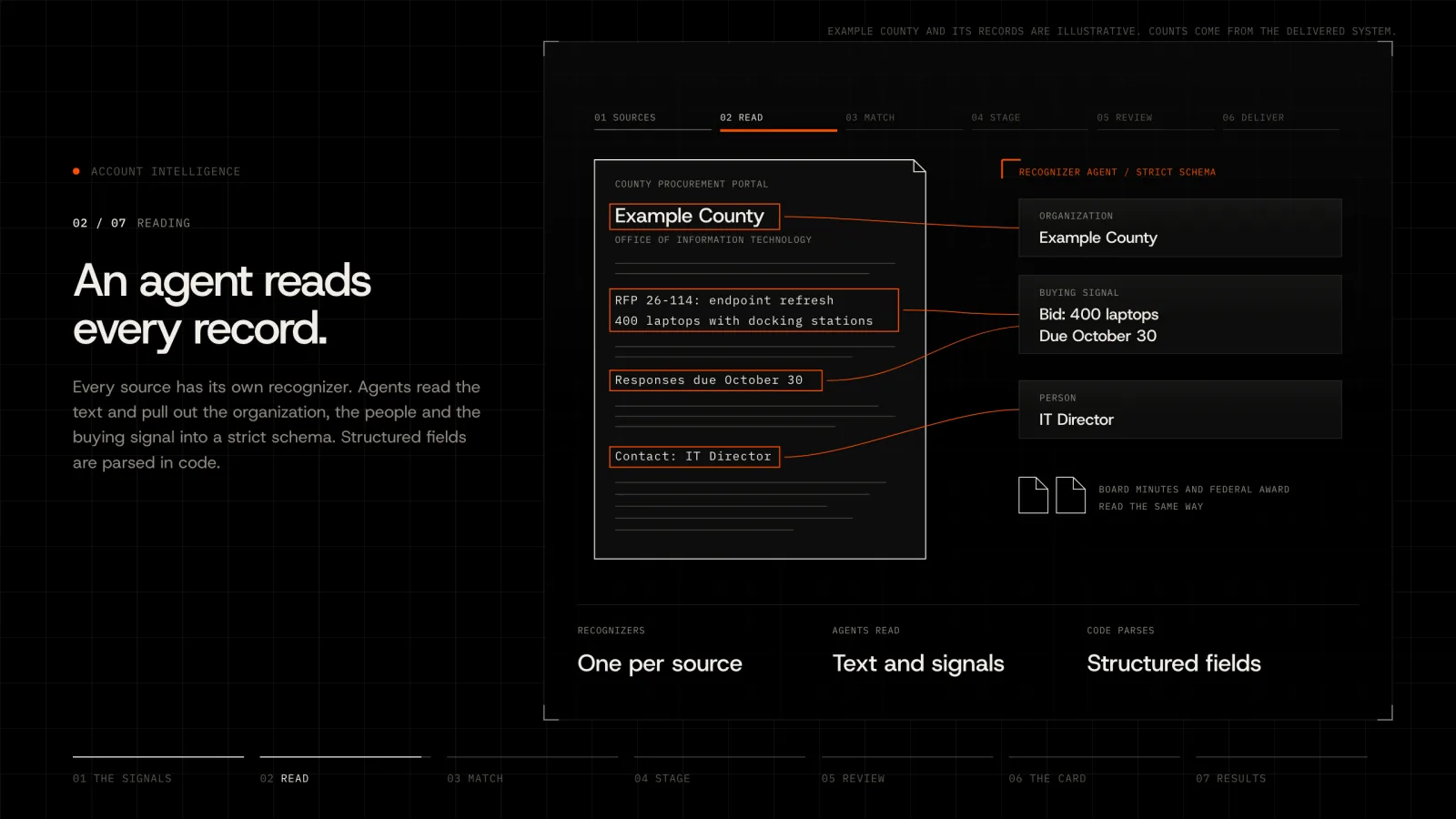

Client work
Modernizing the insurance journey across two brands
Two HUB insurance brands, Insureon and TechInsurance, needed steady work on the pages customers use and the systems behind them. We built policy recommendations and profession search, gave editors better publishing controls, made accessibility checks repeatable and kept the releases moving.
Read the story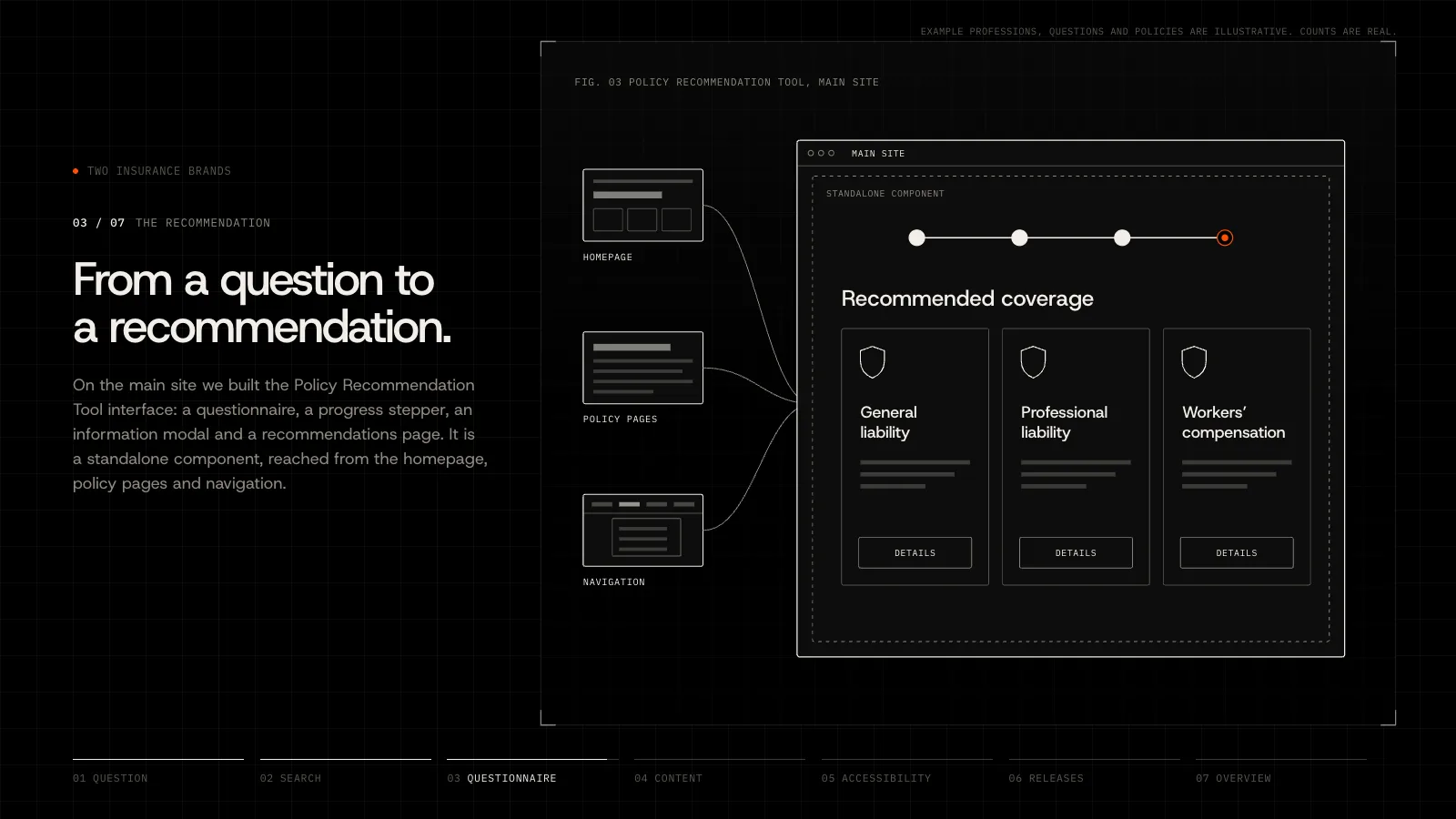

Bring us the project that matters most.
Tell us what you’re building and what’s in the way. You’ll hear back within 24 hours.